From Working Communication to Real-Time Control
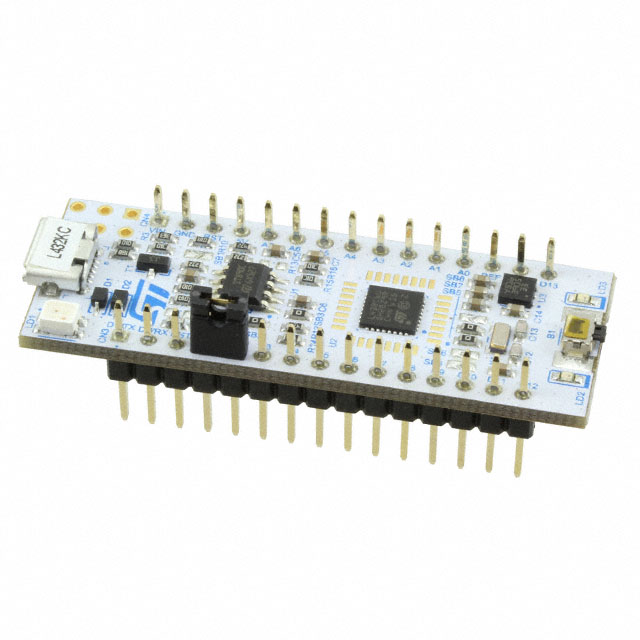
After establishing reliable ESP-NOW communication between TX and RX devices and implementing basic SPI functionality, the next critical milestone was integrating the STM32L432KC Motor Control Board (MCB) into the data flow. What seemed like a straightforward addition of another SPI peripheral quickly revealed the complexities of multi-platform embedded development and real-time system requirements.
The goal was clear: extend the proven TX→RX communication chain to TX→RX→MCB, enabling joystick commands to control motors through a dedicated motor control processor. The reality involved wrestling with timing domains, DMA buffer management, and the fundamental differences between ESP32-C3 and STM32 development ecosystems.
Development Environment Transition
Moving from the unified ESP-IDF environment to STM32 development required establishing an entirely different toolchain and workflow.
STM32CubeMX vs. STM32CubeIDE Decision: Initial attempts with STM32CubeIDE revealed it created friction with the established VIM and CMake workflow. STM32CubeMX for code generation, followed by CMake integration, maintained consistency with the ESP32-C3 development approach while providing the necessary STM32 peripheral configuration.
OpenOCD and GDB Return: Unlike ESP-IDF’s integrated debugging, STM32 development required manual OpenOCD configuration and GDB setup. This transition back to lower-level debugging tools provided more direct control but demanded greater familiarity with ARM debugging fundamentals.
CMake Integration Challenges: Combining STM32CubeMX-generated code with a custom CMake build system required careful management of generated files and manual integration of STM32 HAL libraries.
STM32 SPI Peripheral Implementation
Configuring the STM32L432KC as a full-duplex SPI peripheral introduced new categories of complexity beyond the ESP32-C3 controller implementation.
Basic Peripheral Configuration
The STM32 SPI peripheral required careful timing coordination with the ESP32-C3 controller. Initial configuration established the foundation for bidirectional communication.
Interrupt Handling Architecture
Unlike the ESP32-C3 controller side, the STM32 peripheral required reactive interrupt handling for incoming data. The peripheral couldn’t predict when the ESP32-C3 would initiate communication, requiring robust buffer management and rapid response capability.
DMA Integration Necessity
Initial polling-based SPI implementation quickly revealed timing inadequacies for real-time motor control. When motor commands required processing within tight timing windows, CPU-blocking SPI operations created unacceptable latency.
DMA Configuration Investigation
Implementing DMA for SPI communication required understanding buffer management requirements and timing constraints. The investigation revealed the complexity of coordinating DMA transfers with SPI communication timing.
DMA Buffer Management Exploration
Initial DMA implementation focused on circular buffer approaches, though this would later prove problematic for the specific timing requirements. Circular buffer management introduced complex state tracking requirements that demanded careful evaluation.
Timing and Synchronization Challenges
Cross-platform communication revealed fundamental timing domain differences between ESP32-C3 and STM32L432KC.
Clock Domain Differences
The ESP32-C3 and STM32 operated at different base frequencies, creating setup/hold time violations:
- ESP32-C3: 80MHz APB clock with configurable SPI divisors
- STM32L432KC: 80MHz system clock with independent SPI timing
Logic Analyzer Validation
Timing issues required systematic logic analyzer investigation:
Setup Time Violations: ESP32-C3 data transitions occurred too close to STM32 clock edges Hold Time Issues: STM32 data wasn’t stable long enough for ESP32-C3 sampling Clock Jitter: Inconsistent timing between platforms caused intermittent communication failures
Resolution Strategy: Reducing SPI clock frequency from 1MHz to 500kHz provided adequate timing margins for both platforms.
Data Format and Endianness Resolution
Multi-platform communication exposed byte ordering inconsistencies that required protocol-level solutions.
Endianness Investigation
Multi-platform communication revealed the importance of data format consistency. The investigation identified potential byte ordering issues that required systematic resolution for reliable data transfer between ESP32-C3 and STM32L432KC platforms.
Protocol Definition Investigation
Establishing a consistent packet structure required careful consideration of data format and transmission reliability. The investigation focused on creating robust communication protocols for multi-platform embedded systems.
Integration Success Criteria
The STM32 integration milestone was considered complete when several critical capabilities were demonstrated:
- Reliable Multi-Platform Communication: ESP32-C3 to STM32L432KC data transfer without corruption
- Real-Time Performance: Communication architecture ready for motor control timing requirements
- DMA Stability: Continuous operation without buffer overflows or communication failures
- Bidirectional Data Flow: Motor status feedback successfully transmitted back to ESP32-C3
- System Scalability: Architecture ready for additional peripheral integration
Engineering Methodology Validation
This integration phase reinforced several critical embedded development practices:
Component Isolation Testing: Each SPI implementation was validated independently before integration Logic Analyzer Dependency: Complex timing relationships couldn’t be debugged without hardware-level visibility Systematic Problem Resolution: Multi-platform issues required methodical investigation across both development environments Documentation Discipline: Engineering journal entries became essential for tracking cross-platform debugging discoveries
Looking Forward: ADC Limitations Discovery
With reliable STM32 integration established, the next development phase focused on replacing test data with real analog inputs from joystick potentiometers. This transition would quickly reveal the ESP32-C3’s ADC limitations and catalyze the discovery of analog multiplexing techniques that would fundamentally change the project’s trajectory.
The successful STM32 integration provided the stable foundation necessary for the analog input expansion that followed, demonstrating how methodical subsystem development enables complex system capabilities.
Key Takeaway: Multi-platform embedded development requires understanding each platform’s timing characteristics, development ecosystem differences, and communication protocol requirements. Success depends on systematic integration testing and comprehensive hardware-level debugging.